What haunts me

Sometimes, I try to think about what it would take for me to flee, to leave everything behind.

On Wednesday, the President issued a series of executive orders on immigration. From expanding detention and deportation to denying visas for refugees and asylum-seekers, to moving funds to build a wall on the border with Mexico, these orders represent only part of a turn to isolationism and xenophobia that I don’t think we’ve seen since before WWII.

And we all know how that turned out.

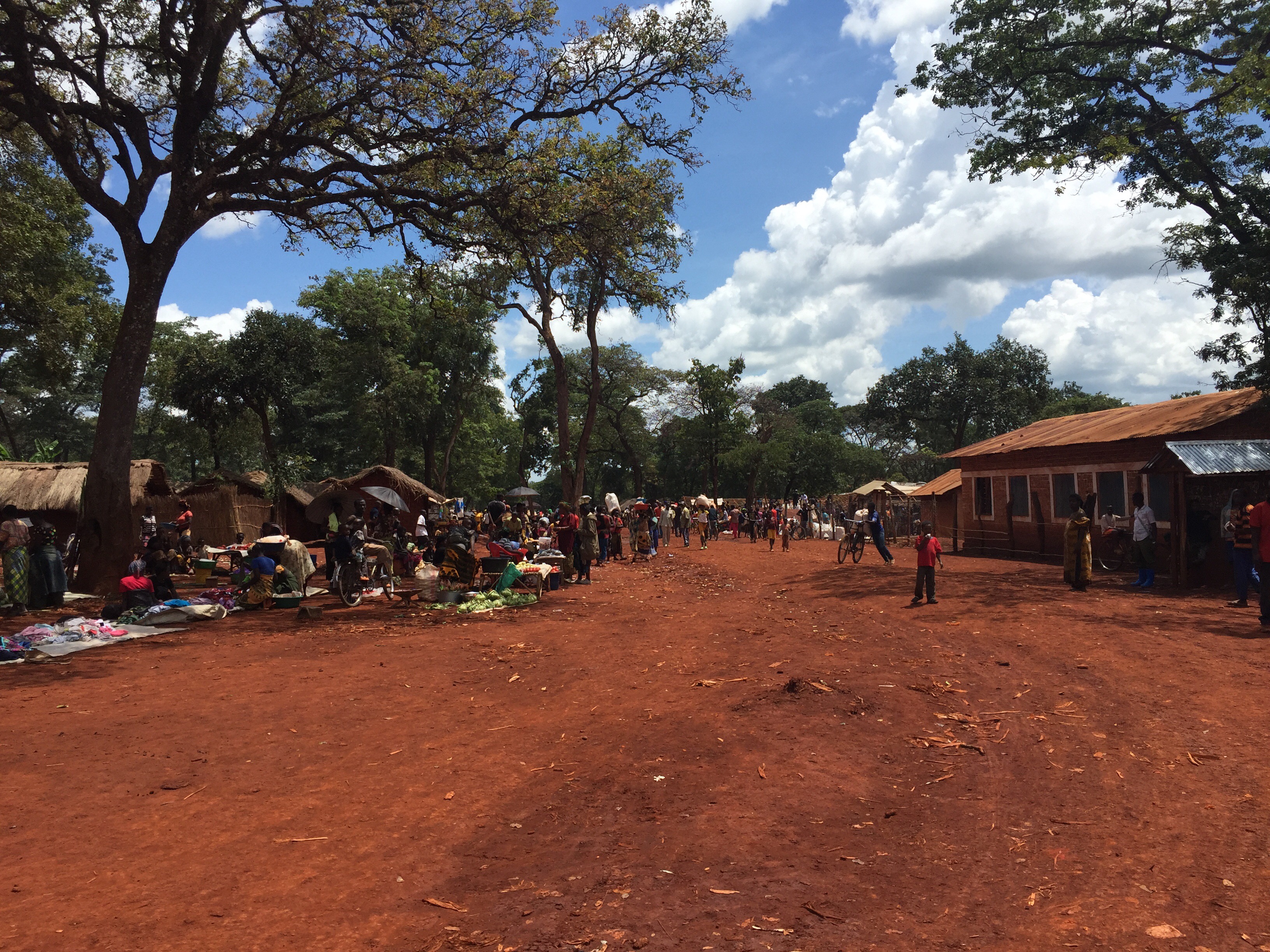
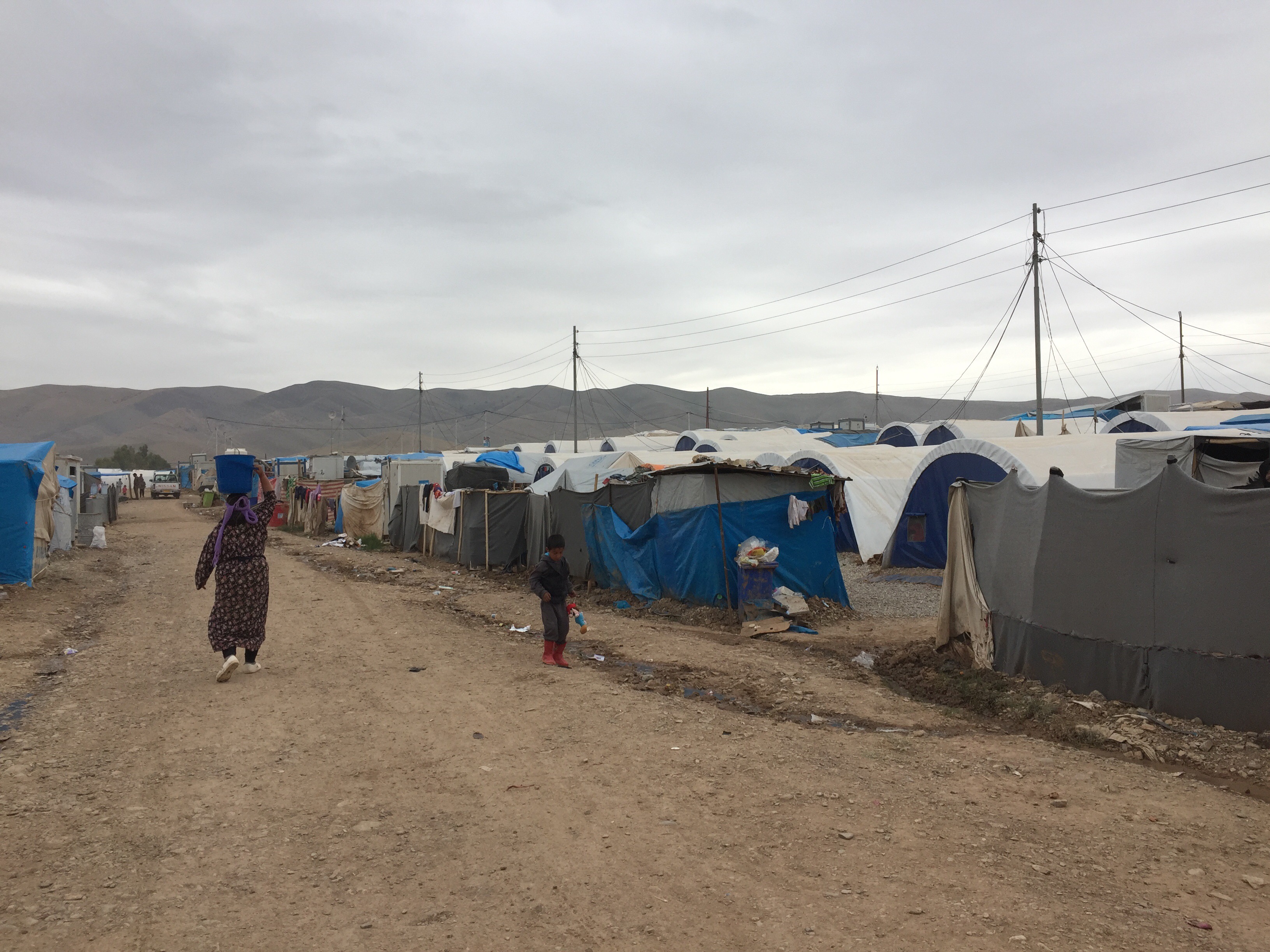
In 2016 and 2015, I had the immense opportunity to spend time in refugee and displaced person camps in Iraq and Tanzania. With researchers and staff at the IRC–a humanitarian organization–I designed and implemented a two-phase study of social norms of violence in schools. I hope that soon I can tell you about what we found, but now I think it’s time to tell you a little bit about what I saw. Unlike many visitors to these camps, I had a lot of time. Those who come in to give technical assistance or to drop off supplies rarely spend much time with refugees themselves. Once I had trained my staff, I just waited for the data to come in. I had hours to spend wandering around the camps, to sit at the community services center and schools, to listen to stories, to visit classrooms, to be a guest of families and principals and community lending organizations, to watch people work and not work, to play with children and learn numbers and animals in Kiswahili and Kirundi and Arabic and Kurdish, to observe.
Sometimes I think about what my life would have been like if I hadn’t been able to leave Venezuela when I decided it was time. If, when I felt unsafe and that I could be mugged or raped or just hooted at any moment of the day, I didn’t have any choice but to stay there. If I didn’t have anywhere to go.

These trips to refugee camps and to schools with significant refugee and IDP populations took their toll on me emotionally. Up to now, I have been unable to write much about it. The structure of most refugee camps means that when someone sees a white person, it’s assumed they are there to help. I visited classrooms where they asked for shoes and desks. As I walked the rows of tents, elderly people held their hands out asking for change, pointing at their empty bellies or ailing hips. Children called me mzungu and asked for money and sweets. It was difficult to explain that I was there to do research, to think about the long-term consequences of their stay. It was true that I had more money than each of them, but also true that I couldn’t feed them all, and I couldn’t choose either.

Sometimes, I wonder how little could I eat before I had to leave, how much of the little sustenance I had could I turn over to those who needed it most? How do you choose between getting enough to keep yourself working and enough to keep those you love alive?

I heard so many stories of pain, of loss, of of helplessness. I also became very close with a number of refugees, particularly in Nyarugusu. I met their families, was welcomed into their homes; they were and still are my friends.

Sometimes, I think about what I would take. Where is my passport? And a little cash? Do you take the pictures? The computer? Or the guns?

Paterne* speaks perfect English. He’s abrupt, formal, and even a little cold, but has one of the most beautiful, welcoming smiles I’ve ever seen, if you can get him to open up and laugh a little. He wants to teach children in the camp English. He sees that the French schooling they receive is inadequate, that going back to Burundi might never be an option for him and his family. In Tanzania they speak English. In the US they speak English. The future he sees is in English, but they have no pencils, no chalkboards, no ledger books.
Sometimes, I have to not think about them. I have to pretend that they are not cold, or not hungry, or not tired of eating only one food, or not plagued by infection and disease.

I saw astonishing feats of ingenuity and self-preservation. Burundians who had carried foot-pedal sewing machines on their backs across the border. Solar panels with far too many wires to be safe protruding from every side. I sat with Peter,* a young Burundian man who sang love songs in Kirundi and Kiswahili while he strummed a guitar made from an oil can. His friend made it while they were in the camp as children; he took it back to Burundi when he was forcibly removed in the early 2000s, and back to Tanzania when the border opened again to refugees.

When I arrived in Iraq in November, I was shown a map of the north, with little red bombs for where ISIS was active. We are here, I was told. Don’t worry, it would take ISIS a week to get to us; we’ll know they are coming.

Many of the children were afraid to use the little English they had with me, but Justin* wanted to be my friend. He wanted me to visit his family, his grandmother, to meet his uncle who had taught him English. His smile was enough to break my heart; he had only just arrived in camp and didn’t want anything from me but to practice his English, didn’t know yet that white ladies were mostly there to give him food and clothes.

If they come, someone else told me, we’ll just run into the mountains. We have done it before. The local people will give us food and somewhere to sleep. We will not leave you behind.

Arnold* went back to Burundi. Unmarried, no children, he feared for his life as his stepmother and siblings had threatened to kill him for his father’s land, but in Burundi, he could continue his studies. So many of my friends had left their studies behind. Doctors and nurses and linguists. In Iraq, many universities are closed. In Tanzania, the government won’t let Burundians study, so they work as teachers, as sanitation educators, hoping someone will hear them. Arnold sends me whatsapp messages occasionally, telling me he is studying hard or that he is running out of money. He has no family, nowhere to go; there is no work and he only wants to finish school.

Sometimes I wonder how bad it would have had to be for me to leave school, to not finish university; my education and my honor were all I was told mattered. Would I have left if my life were threatened? My bodily safety? How threatened? Would they have to rape me or murder my friends first, or would I go knowing it was a possibility?

At the beginning of January, I received a message from one of my refugee staff. He told me that he had been resettled, per the US government’s commitment to help UNHCR to relocate 50,000 Congolese, many of them to the US. Having spent 20 years in camps in Tanzania, Frederic* and his six children and his wife made it out, just under the gun, I said.

I had no idea just how close it would be. I wonder if the others will ever make it now.

Elaine* has had two miscarriages since she arrived at Nyarugusu less than two years ago. The first time kept her from working on our research as she fought infection, unable to get the proper nourishment she needed to heal. She desperately wants a baby, wants to show her family that the wedding they couldn’t afford, the bride price her husband couldn’t pay because there is no work in the camp, that running for their freedom was all worth it.

What could you grab in five minutes? In five hours? In five days?

Ahmed* worked for the US military at a base in Anbar province in Iraq. As a translator for the invaders, he was labeled a collaborator and when ISIS came, he feared for his life, and the lives of his family. We put him in that situation. He sacrificed for our war effort, for the ostensible “safety and freedom of the American people,” but with this executive order, he has no chance of getting out. He now lives in a tent in Arbat refugee camp with his children and extended family all around, the ones that are still alive at least, hoping that he can one day go home.

Sometimes, I try to think about how I would feel, having finally reached someplace safe, someplace I was told people would help me, that I spent years dreaming about and working towards, that it would be wonderful and free from fear, and then be told to leave.

*I have changed all names to protect the identities of people who spoke with me.
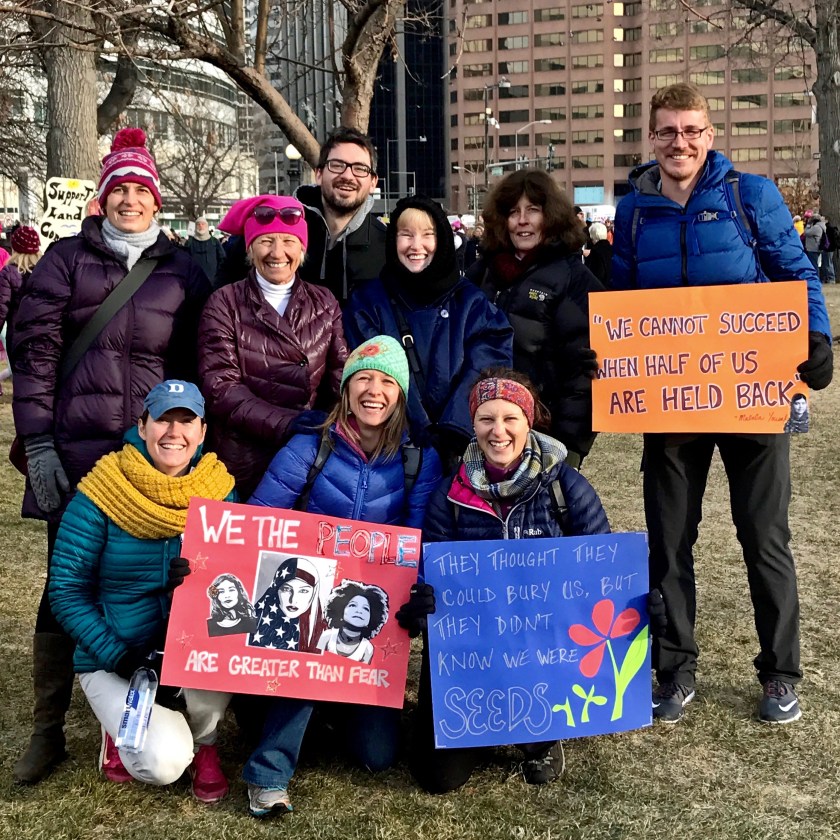
They wanted to bury us, but they didn’t know we were seeds

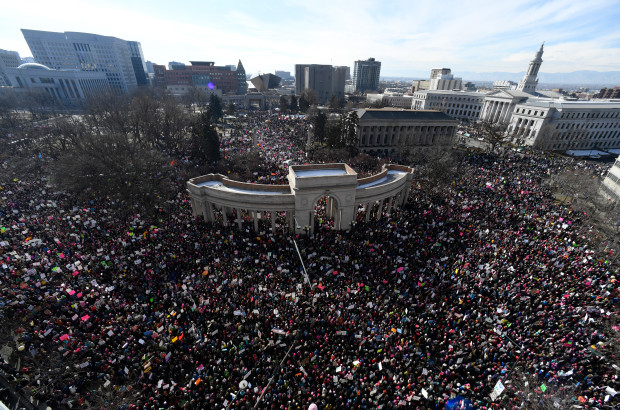
Saturday morning I boarded an early light rail train to Downtown Denver for the Women’s March. With a few friends from high school and their mothers and friends, we spent the day together: fighting, listening, talking, thinking, and marching. We laughed at signs that were funny, took hope in ones that were uplifting, delighted in the children and young people who came out to support their moms, to advocate for their own rights. We chanted that this is what democracy looks like and mostly not dressed for it, stood in the cold for hours. It was incredible.

Women's March on Denver

(Civic Center Park on 1/21/17. Photo from the Denver Post)

I think it’s important to tell you, to put down on paper, why I’m marching. Though many of you reading this probably assumed I would be, I had reservations. The original lack of inclusiveness and diverse voices in planning the march disturbed me; it felt like co-opting Black labor and Black ideas when we—as white women—suddenly found ourselves marginalized. I wasn’t sure I wanted to be part of such a myopic movement, wasn’t sure I could represent the inclusiveness I feel is often missing from these conversations. I also wasn’t sure who I would go with. Having recently returned to Denver, the politics of many of my friends here were a big unknown. It’s not always something I talked about with new acquaintances, and frankly, I simply never talked about these things with some of my friends from high school.

But go I did, and joyfully, expectantly, with longing and a little fear, and prepared–a bandana and granola bars and sliced apples and water in my pocket. Prepared for the worst (which I didn’t think would actually happen), but also prepared to take what I knew was only a first step. The Women’s March is the start of a very long fight that will be the next four years. It is a symbolic start to a particular fight, but also the continuation of a much older fight for which I have too long remained reticent, hesitant to jump in. Attacks on the rights of all people who identify as women, immigrants and refugees, Muslims, people of color and LGBTQIA; on voting rights; on sexual and reproductive rights and health; on health care; on social safety net programs; on federal lands, the earth, and our climate; on our ability to speak out and speak the truth. These are not new, but they are coming, fast and furious. Now is not a time to congratulate ourselves for marching, but a time to make connections, to find solidarity, to acknowledge the role that privilege and intersectionality play in oppression, to gear up for the next fight.

It’s already here and #icantkeepquiet.

Feminism, as it has been practiced by white women, has long excluded and erased women of color, women with disabilities, women who do not follow traditional gender scripts and norms, and countless others. This has been its failing. For all the gains we have made to put women in positions of power and improve pay equality and open more opportunities for women and girls, you can’t decrease the gender wage gap if growing proportions of women continue to be relegated to low-paying jobs, continue to be silenced. For all the thinkpieces trying to explain the election results with talk of the economic insecurity of “working class Americans,” almost two thirds of people who work minimum wage jobs are women, many of them single mothers, and disproportionately are black and brown.

That said, we have come far. My mother, an extremely accomplished nurse practitioner, recently told me how amazed she was at the opportunities I had. You were a nurse or a teacher, that’s all there was for women, she said. That these were not my only options is part of my immense privilege, one that I want to see extended and expanded to more women, more little girls. I want every little girl in Denver, whether she grows up off Federal, or in Globeville, or in Cherry Hills Village to have that chance, to know that she can be a doctor, or a CEO, or a self-employed Ph.D. economist who does contract work for international organizations.

I’m marching because I do not want to return to a time when I would be unable to get birth control because I am not married, to a time when if I did get pregnant, my list of options would include seeing a back-alley butcher, to a time when executives were wantonly permitted to sexually harass female staff or discriminate against them for promotions and raises.

Let’s not go backwards.

I’m marching because I have many times said that my professional goal is to end gender-based violence, and the current administration is already working to dismantle and reverse progress in that direction. I believe that gutting the Violence Against Women Act is a national travesty. Women, children, immigrants, refugees, and other marginalized people disproportionately face violence from their partners, parents, and people in power and VAWA exists to mitigate those harms. The law needs some rethinking to focus less on law enforcement and to better serve Native Americans, LGBTQIA communities, and minorities. It could include community rehabilitation and childhood education on consent; it should give tribes greater sovereignty over crimes that occur on tribal lands and against their members. But dismissing tens of grant programs that train law enforcement, that support women leaving abusive relationships with financial support and legal assistance and counseling, that fund hotlines and shelters, and more, only puts women in more danger.

I’m marching because I love Colorado’s wilderness, because I picked up and up-ended my entire life to be back here, to spend time with my family, in the sunshine, in the mountains. I don’t want it spoiled by climate change and reckless industry that doesn’t value the health and wellbeing of Coloradans.

I’m marching because my whole life, I’ve been told that I can do anything, that I could be anything. That there were no doors closed to me. The ones that seemed closed, I kicked them down. It’s true that for many of us, many educated white women whom I count among my friends, this is the first time that someone has told us we are not worthy and a (large share of a) nation of voters agreed. And that is part of my privilege, too. It has always been this way for Black women, for Black men, for people of color and other marginalized folks. Don’t get me wrong, I’ve faced haters. Professors who told me that “grad school isn’t for everyone” and men who told me I wasn’t good enough. But never did I believe they were anything but wrong. Never did I believe I couldn’t kick in that door. Never in my lifetime has such a large group seemed to have said, “my perceived economic security is more important than your worth as a person, than your bodily security from rape and sexual assault, than the trauma of listening to abusive rhetoric as it rains hate down on your accomplishments.”

I’m marching because this country needs and deserves to benefit from the color and culture and friendship of immigrants and refugees. Because they deserve to live here safely and peacefully, to know that this a place that will be better than a dry, dusty camp in Tanzania, or a snowy one in Greece, or a gang-controlled city where they fear for their lives. Because a quick look at history tells you that walls don’t work.

I’m marching because I want the newly inaugurated president and the Republican-controlled Congress to know that he did not win by a landslide, not by any measure, and they do not have a mandate to do as they please. I want him to know that if he wants to “win” at being president, and we all know he likes to win, he will have to work WITH and FOR women. He will have to work WITH and FOR groups that have been marginalized and oppressed.

I want the president to know that America is already great. That we have strong, independent, intelligent women who run our businesses, who raise great kids, who make beautiful things, who fight against poverty and oppression and hate every day. And that all of that energy will be directed at any attempts to bring those women down for the next four years. This is only the start.

Saturday morning was uplifting; it was beautiful. I cried seeing pictures of massive crowds of hundreds of thousands of people in Boston and DC and Raleigh and San Francisco and Denver and Chicago. I grinned seeing my friends posing with their moms and their babies and their lifelong friends at marches all over the world. My heart got fuller with each picture of a sister march in Antarctica and Crested Butte and small towns all over. I am sending giant hugs to every single one of you. Thank you for coming out. For speaking out.

FullSizeRender (1).jpg

January 21, 2017 was a incredibly special day. Keep it in your hearts, let it burn quietly and consistently. Feed it with love and fervor and hope for a better, more humane world. You will need it; you will need it to fuel you, to keep marching, to keep fighting, to protect yourself from the lies, to make space for those who have been voiceless to speak, or to speak for them when they are silenced, to pull every single one of us forward.

Notes on the title of this post: A few people had this quote on signs at the Denver march, including one of my group. Its provenance is often cited as a Mexican proverb,* but other sources point to the homoerotic poetry of Greek writer Dino Christianopolous, proving once again that everything great comes from gay culture: “what didn’t you do to bury me / but you forgot that I was a seed,” translated by Prof. Nicholas Kostis.

*Quisieron enterrarnos, pero se les olvidó que somos semillas, as adopted by Mexican counterculture and revolutionary movements.


Some reflections on two months without social media

Happy New Year, Friends! I am back from my social media break, and though I wish I could say I was refreshed and ready to take on the world again, I’ll admit that I am simply not. I promise that with each day, I’ll be more ready, but today, I’m taking it easy still.

The first few days of my break were really easy; except for the first day, I didn’t even think about logging on to twitter or facebook or anything else. The only one I really missed the whole time was instagram, but I found that I replaced a lot of those interactions with more intimate person-to-person interactions, a friend sending me pictures of her baby, me sending links to friends via text message. Election day was my first slip, and I needed a little support afterward as crying in the Atlanta airport by myself did not seem the healthiest way to deal with that disappointment.

There were times when I found myself navigating to twitter or facebook without thinking about it. I’d signed out, but it rapidly became clear how much I use them as a distraction from what I should be and want to be doing. I also struggled with what to read. Still being a little nomadic (I went from a blue state to a red state to a blue state that used to be red to a red state that used to be blue in a matter of a week), it was hard to keep a lot of physical material around.

It was nice, and I think necessary, to take a break from the newscycle. The election, its aftermath, Obama’s last days. I can parse all these things later. Not reading about it, or just reading a few articles a day that Apple News decided were up my alley, helped keep my stress level low.

I did lots of other things, too. I ran my first half marathon; I took up skate skiing; I joined a Masters’ swim team run by an old swimming buddy and her husband. I read a lot of books, including Swing Time, You Too Can Have a Body Like Mine, Half of a Yellow Sun, and Homegoing. I don’t recommend trying to read any of these simultaneously, but I do recommend them all whole-heartedly.

I didn’t totally succeed at a break. I occasionally logged into facebook or read the tweets that twitter was really worried I was missing and so sent to my inbox. But I also didn’t totally commit, either, by deleting or suspending accounts. I didn’t feel that I could, especially in this transition phase. I did take them all off of my phone, at least, so I think I spent less time looking at my phone.

Perhaps the biggest hurdle to going cold turkey was just how much both my social and business ventures are intimately connected to social media. Some friends started using facebook to discuss half marathon logistics, so if I didn’t log on, I was totally out of the loop. Similarly, I joined a facebook page dedicated to finding housing when the local paper proved almost useless (the page eventually was, too, but I’m blaming Airbnb for that, a story for another time). I went to a Duke event in Denver, both trying to make friends and potential business connections, a few of whom used LinkedIn to contact me soon afterward. I logged in when I hadn’t heard from them via email, and there they were. And then there are all the webpages that let you sign in with a social media account.

I still managed to find mindless things to take up my time, like crossword puzzles and sudoku, so perhaps it’s better spent reading tweets and longform journalism and the news, but who knows?

Overall, I’m glad I did it. It wasn’t catastrophically lonesomeness-inducing, as I’d feared, and I certainly managed to fill the hours with more effective work and activities. I think I will spend less time total in these spaces going forward, but I will continue to use them to inform my writing, give me ideas of what to read, and let me stay in touch on a few key issues, and with a few key people. Oh, and occasionally to see pictures of cute babies.

But when I can’t deal with it all, I know that I can turn it all off, and I won’t hesitate.

Happy 2017! Hope to see some of you in Chicago for the ASSAs!